Eye Shape Detector
What eye shape do I have?
Upload one front-facing photo. The detector maps both eyes, measures the tilt of the corners, how open they are, where the eyelid crease sits and how far apart they are, then names your eye shape: almond, round, upturned, downturned, hooded or monolid.
Or try a sample face:
Your photo never leaves your device. The eye mapping runs in your browser.
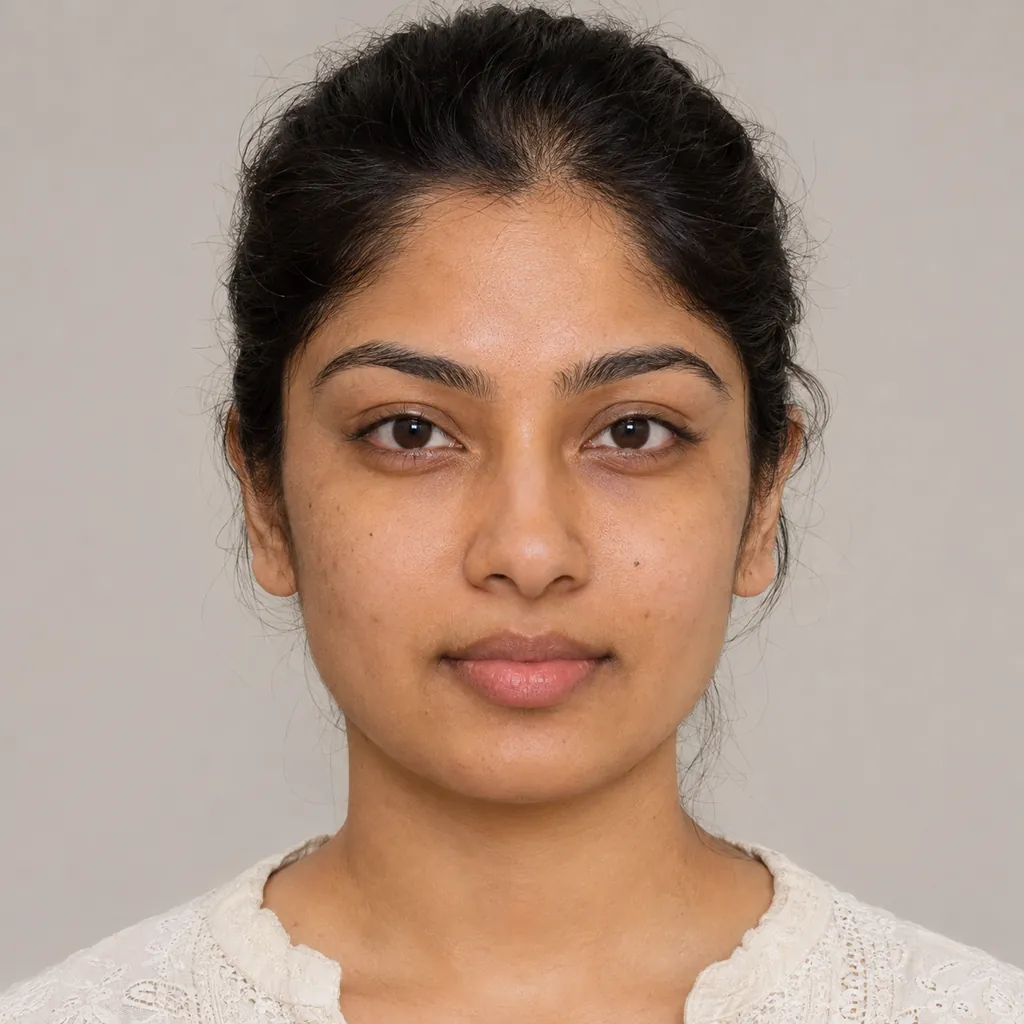
Sample print · AI-generated face
Four readings, drawn on your eyes
The face model places 478 points on your face, including the outline of each eyelid and the edge of each iris. The detector levels your face on the line between your eyes, so a tilted head does not read as tilted eyes, then takes four readings.
Tilt
The angle of the line from the inner corner to the outer corner, against the level line. Outer corners higher read as upturned; lower, as downturned.
Opening
The tallest gap between the lids, divided by the eye width. Round eyes open taller than almond eyes and often show white above or below the iris.
Crease
The mesh has no point for the eyelid crease, so the detector reads it from the photo: it walks up from the lashes and looks for the fold line. No line means hooded or monolid.
Gap
The distance between the inner corners, against the width of one eye. Around one eye width is balanced; much more is wide-set, less is close-set.
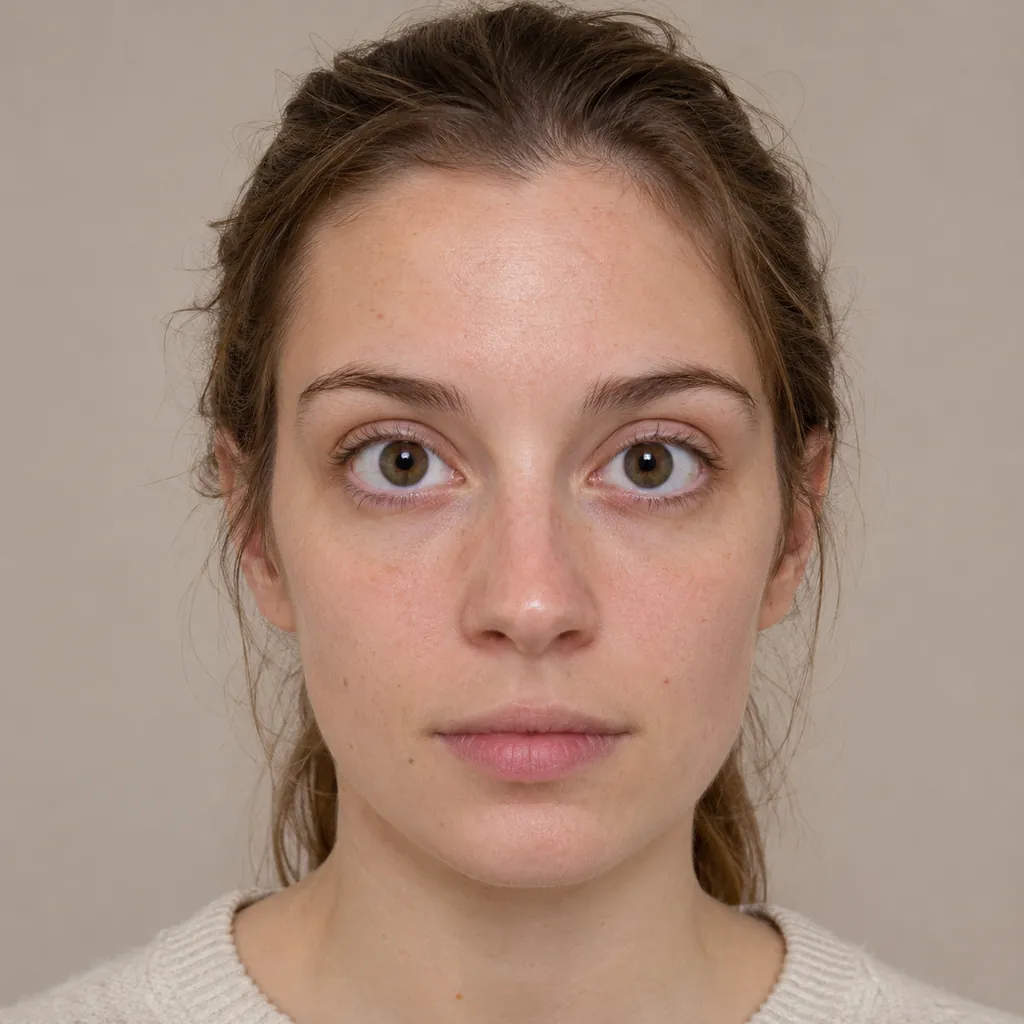
Sample print · AI-generated face
Eye shape chart
The six eye shapes, each on a sample face with the detector’s own readings drawn on. Most eyes are a mix of two, such as hooded and downturned, so the result gives a share for every shape.
Longer than tall · crease shows · corners taper
Almond
Almond eyes are about three times as wide as they are tall, with pointed corners, a visible crease and a little of the upper lid showing. The iris touches or tucks just under the upper lid, with no white above or below it. It is the most common eye shape.
Tall opening · white around the iris
Round
Round eyes open taller than they are long and curve evenly top and bottom, so a sliver of white often shows above or below the iris. The crease is usually clear. They read as big and bright.
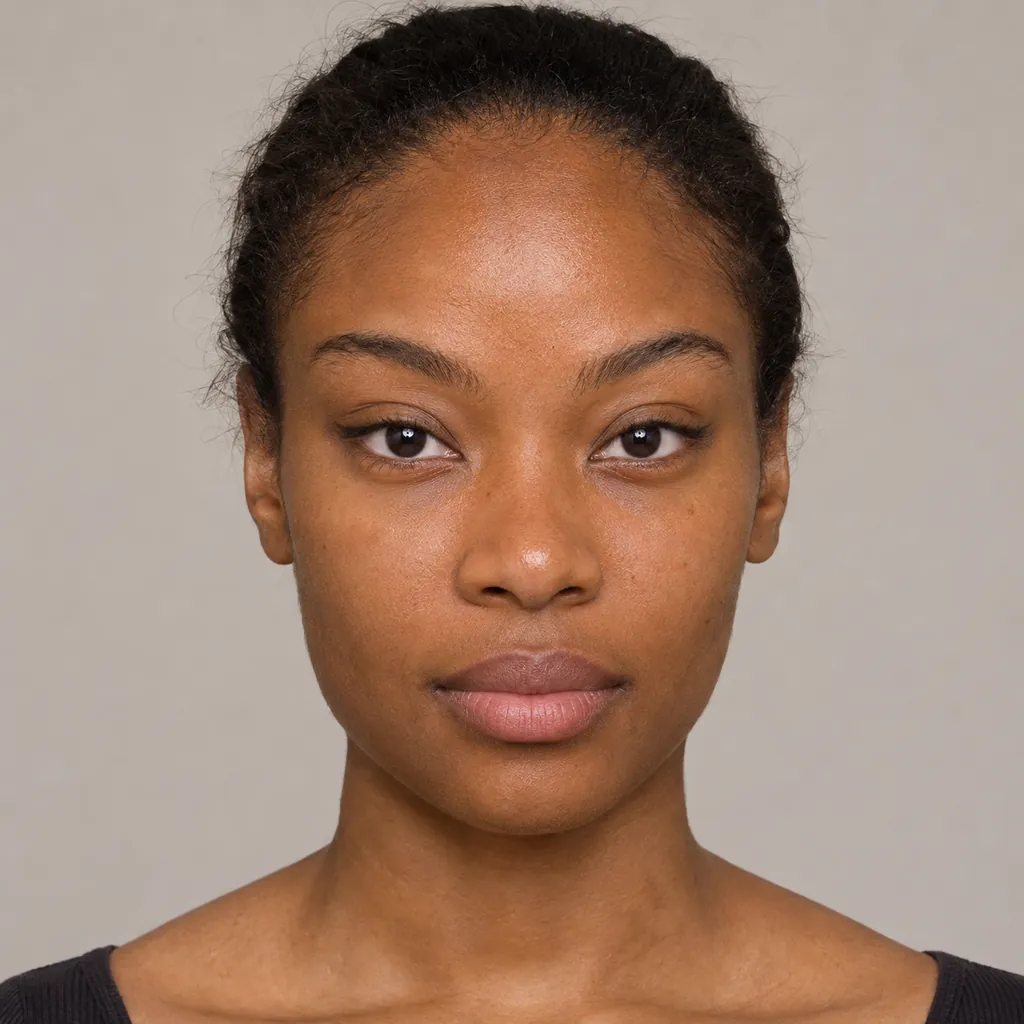
Outer corner higher than the inner corner
Upturned
Upturned eyes rise from the inner corner to the outer corner, giving a lifted, cat-eye line. The lower lid often looks slightly raised at the outer end too. A gentle upward tilt is common; a clear one is what gives this shape its name.

Outer corner lower than the inner corner
Downturned
Downturned eyes slope down toward the outer corner, which gives a soft, gentle look. The outer end of the upper lid can droop slightly. It often comes with a hood, and the tilt can grow with age as the brow and lid relax.
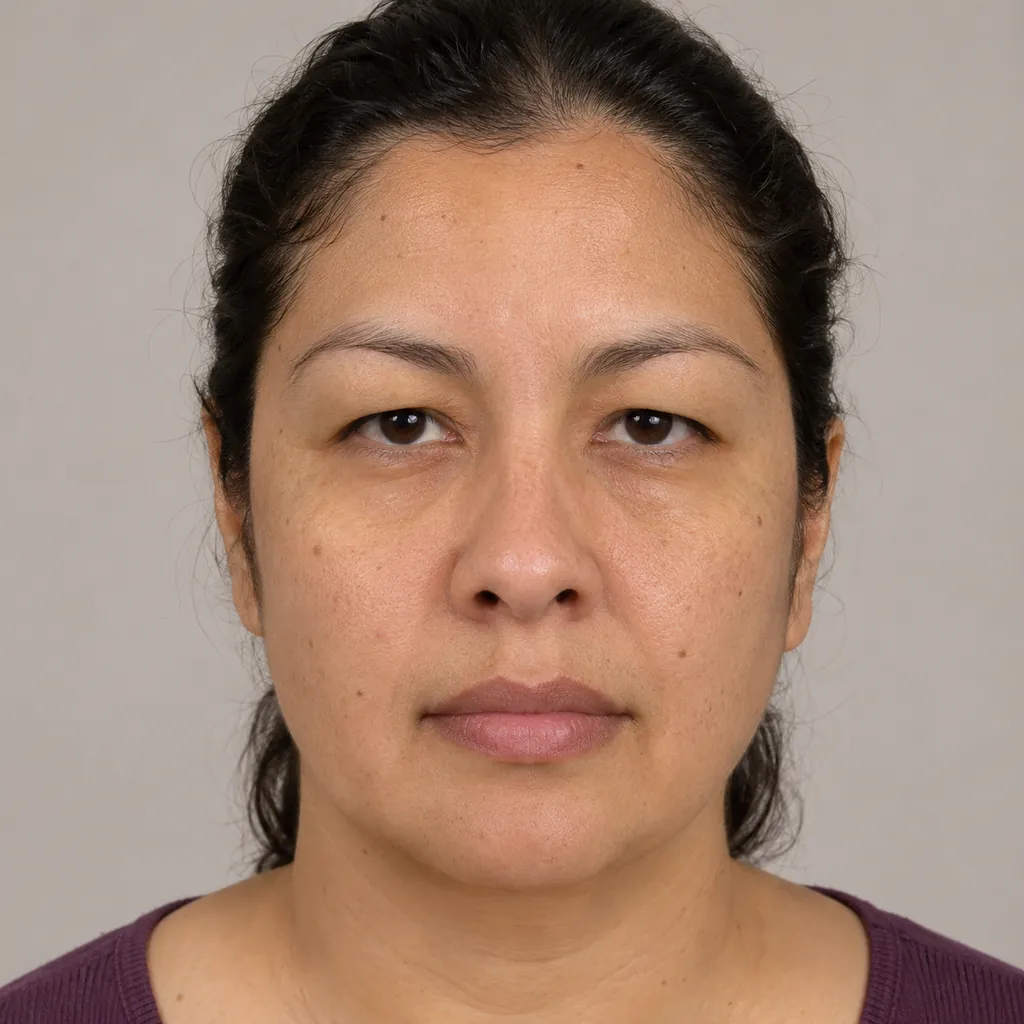
Crease hidden by a fold of skin from the brow
Hooded
Hooded eyes have a crease, but a fold of skin from the brow bone hangs over it and covers most of the moving lid when the eyes are open. Close the eyes and the crease appears. Hoods are common and become more so with age.

No crease at all · smooth, flat upper lid
Monolid
A monolid has no crease: the upper lid runs smooth from the lashes to the brow, so there is no fold even when the eye closes. It is common in East Asian faces and often comes with an epicanthic fold at the inner corner, which can make the eyes look wider apart.
Sample faces are AI-generated.
Four more ways eyes are described
Eye shape charts often add these. They describe how the eyes sit in the face, not the outline of the opening, so they combine with any shape above.
Close-set
Gap between the eyes under one eye width
The inner corners sit close together, so the space between the eyes is less than the width of one eye.
Measured: the detector reads the gap (G).
Wide-set
Gap between the eyes over one eye width
The eyes sit further apart than one eye width. An epicanthic fold at the inner corner can make eyes look wider-set than they are.
Measured: the detector reads the gap (G).
Deep-set
Eyes sit back under a strong brow bone
Deep-set eyes sit further back in the skull, so the brow bone casts a shadow and the lid looks smaller. Often seen with hooded lids.
Not measured: a single front photo cannot see depth. Check from the side in a mirror.
Protruding
Eyes sit forward · lid looks prominent
Protruding or prominent eyes sit further forward, so more of the lid and white of the eye shows. They usually also read as round.
Not measured directly: the opening (O) and white above the iris come close.
How to know your eye shape without a photo
You need a mirror and good, even light. Look straight ahead, relax your face, and keep your head level.
- 01
Look for the crease
Can you see a fold line on your upper lid with your eyes open? If yes, you have a creased lid. If it only appears when you close your eyes, your eyes are hooded. If it never appears, you have a monolid.
- 02
Check the iris
Does white show above or below the coloured part of your eye? If yes, your eyes are round. If the lids touch the iris top and bottom, they are almond-shaped.
- 03
Draw the corner line
Hold a pencil level across the inner corners of both eyes. If your outer corners sit above it, your eyes are upturned; below it, downturned.
- 04
Measure the gap
Compare the space between your eyes with the width of one eye. About the same is balanced; more is wide-set; less is close-set.
Get a good reading
- 01
Face the lens
Look straight into the camera with your head level. A turned head makes one eye look narrower than the other.
- 02
Eyes relaxed
Keep a neutral face. A smile pushes the lower lids up and squeezes the opening; wide eyes lift the lids.
- 03
Even light
Face a window or soft light. Strong light from above throws a shadow from the brow that can read as a crease.
- 04
No glasses
Take glasses off and keep hair out of your eyes. Heavy liner or false lashes can hide the crease.
Questions
What eye shape do I have?
Upload a front-facing photo to the detector above and it will tell you, with a share for each of the six shapes: almond, round, upturned, downturned, hooded and monolid. To check by hand, look for the crease, see whether white shows around your iris, and compare your outer corners with a level line through your inner corners.
How many eye shapes are there?
Most charts list six main shapes (almond, round, upturned, downturned, hooded and monolid) plus four ways the eyes sit in the face (close-set, wide-set, deep-set and protruding). These overlap: an eye can be hooded and downturned, or almond and wide-set.
What is the most common eye shape?
Almond is usually cited as the most common shape. Hooded eyes are also very common and grow more common with age, and monolids are common in East Asian populations.
How do I know if I have hooded eyes?
Look straight ahead in a mirror. If skin from the brow hangs down and covers most of the moving lid, so you can barely see your crease or none of your lid, but the crease appears when you close your eyes, your eyes are hooded. The detector looks for the crease line in your photo and asks you to confirm when it cannot see one.
Is the eye shape detector accurate?
It measures your eyes from 478 landmarks and the photo itself, so the readings are repeatable for the same photo. The shape is a best match on those readings, and many eyes sit between two shapes, which is why every shape gets a share. A straight-on photo in even light with relaxed eyes gives the best result.
Do you keep my photo?
No. The model runs in your browser and your photo is never uploaded. Only the model files are downloaded from this site.
Can my eye shape change?
The bones around the eyes stay the same, but the skin does not: brows and lids tend to drop with age, so eyes can become more hooded or downturned over time. Makeup, brow shaping and lighting change how a shape looks in photos, not the shape itself.
Find your eye shape
One photo, four readings, about two seconds. Free, and your photo stays on your device.
Upload a photo